Valorant Map Callouts: Full Callout Guide for Every Map
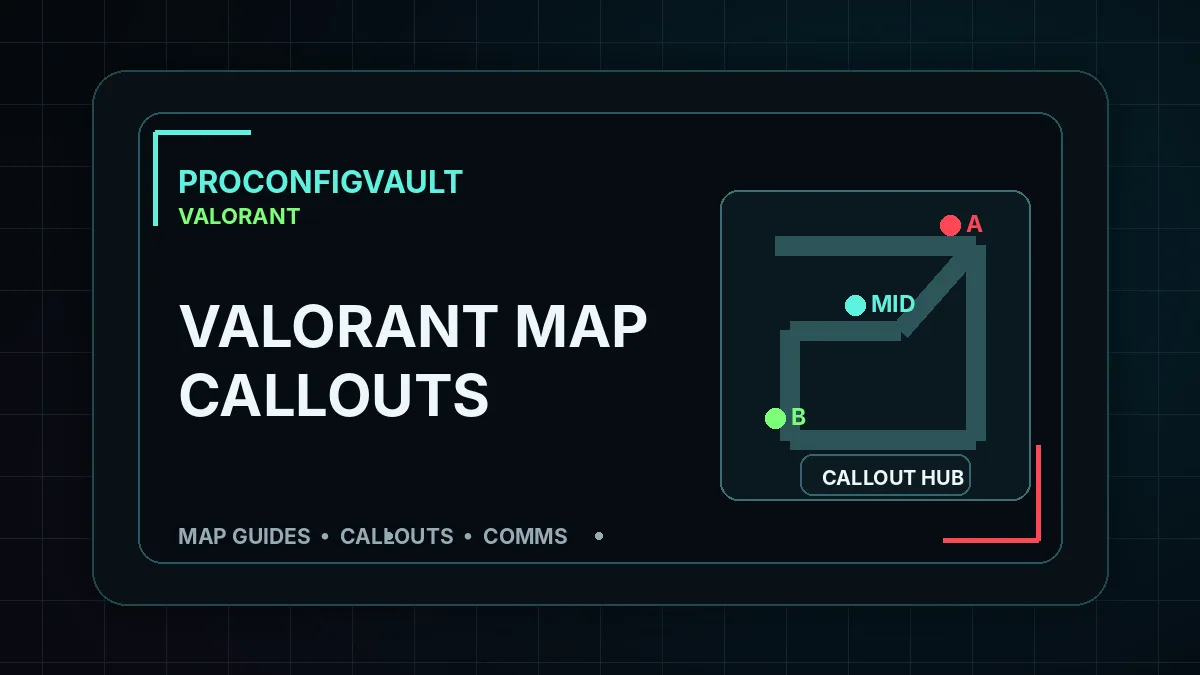
Valorant map callouts help your team share enemy locations quickly, rotate faster and understand map control without wasting time in voice chat. This guide explains the most important callout areas and links to detailed map-specific callout guides for each Valorant map.
Quick answer: Start with the map guides you already have live, then use this hub to expand into missing map callout pages. Ranked map pools change, so this page is a stable callout hub rather than a claim that every listed map is always active in Competitive.
Last reviewed: August 2026. For current queue rotation and patch changes, check the official Valorant news page.
Valorant Map Callouts by Map
Valorant map callouts are the short names players use for sites, lanes, connectors, corners and rotation paths. Good callouts are not complicated. A strong callout tells your team where the enemy is, how much pressure is coming and which part of the map needs help. If a teammate says “two A Main” or “one Garage window,” the whole team can react faster than if the player gives a long description during a fight.
This hub is built for learning the names step by step. Use the map cards below for the full ProConfigVault guides that are already live, then add the missing map pages later so the site grows into a full Valorant map callouts library.
Ascent Callouts
Ascent is a mid-heavy map. Learn A Main, Tree, Garden, Heaven, Hell, Market, Mid Top, Catwalk and B Main first because these areas decide most rotations.
Mid controlTwo sites
Bind Callouts
Bind has no traditional mid, so clear comms around Short, Showers, Hookah, Lamps, Elbow and teleporters are extremely important for both attack and defense.
TeleportersNo mid
Haven Callouts
Haven has three bomb sites. Start with A Long, A Short, Sewers, Garage, C Long, Mid Doors and B Site so your team can manage pressure across the map.
Three sitesGarage
Lotus Callouts
Lotus is a three-site map with rotating doors and layered paths. A Tree, A Drop, B Main, B Link, C Main and C Mound are the first areas beginners should learn.
Rotating doorsThree sites
Important Valorant Callout Types
| Callout type | What it means | Example use |
|---|---|---|
| Site callouts | Names for A, B or C bomb site positions. | “One default, one back site.” |
| Main lanes | The large entry route attackers commonly use. | “Three B Main, use utility now.” |
| Connector callouts | Paths between mid, sites and rotation areas. | “One Market, one rotating CT.” |
| Vertical callouts | Heaven, Hell, Rafters, Drop or elevated positions. | “Jett Heaven with Operator.” |
| Spawn and rotation callouts | Defender spawn, attacker spawn and flank routes. | “Watch flank from attacker spawn.” |
How to Learn Valorant Map Callouts Fast
The fastest way to learn Valorant map callouts is to practice one map at a time. Open a custom game, walk through the map and say each name out loud while looking at the minimap. Start with the official minimap labels, then add common community names that are faster in real ranked communication.
- Pick one map and learn the main site names first.
- Add the entry lanes such as A Main, B Main, C Long, Mid, Short and Garage.
- Learn high-impact corners where enemies commonly hide before retake or post-plant.
- Use the same words every round so your team does not receive mixed comms.
- After each game, write down any callout that caused confusion and confirm the correct name.
Attack and Defense Callout Tips
On attack, callouts should explain space: where your team has control, where a defender was last seen and where utility is blocking the path. On defense, callouts should explain pressure: how many enemies are present, whether the spike is visible and whether attackers are rotating. A clean callout can be as simple as “spike down B Main” or “two rotated from A to mid.”
For ranked players, short callouts beat perfect callouts. If your team understands the message quickly, the callout worked. The goal of this Valorant map callouts hub is to help you build that shared language before the round becomes chaotic.
Missing Map Callout Pages to Build Next
To compete with larger Valorant tools, ProConfigVault needs a complete map cluster. The next step is not just this hub; it is adding dedicated pages for maps that do not yet have full guides, then linking those pages from here and from related settings pages.
- Sunset callouts
- Icebox callouts
- Abyss callouts
- Corrode callouts
- Breeze, Pearl and Split archive coverage if you want a complete historical map library
FAQ
Are Valorant map callouts always the same?
Core names usually stay stable, but map reworks, new strategies and community habits can change how players describe some positions.
Should I use official or community callouts?
Use official minimap labels as the base, then add community shortcuts when they are faster and clear for your team.
Why not publish dead links for every map?
Dead placeholder links create a weak user experience. Build each missing map guide first, then connect it from this hub after the page is ready.
Related: Valoplant Strategy Guide · Best Valorant Settings · Valorant Pro Settings Database